
Pallet Reuse & Recycling
It is important for Villanova University to reuse or recycle pallets because doing so reduces unnecessary waste, conserves valuable natural resources, and supports more efficient campus operations. Wooden pallets can often be repaired and reused many times, extending their life and minimizing the need for new lumber, while damaged pallets can be recycled into mulch, wood chips, or other secondary products. By prioritizing pallet reuse and recycling, Villanova decreases landfill contributions, lowers its environmental footprint, and advances its commitment to responsible materials management and the stewardship of our common home.
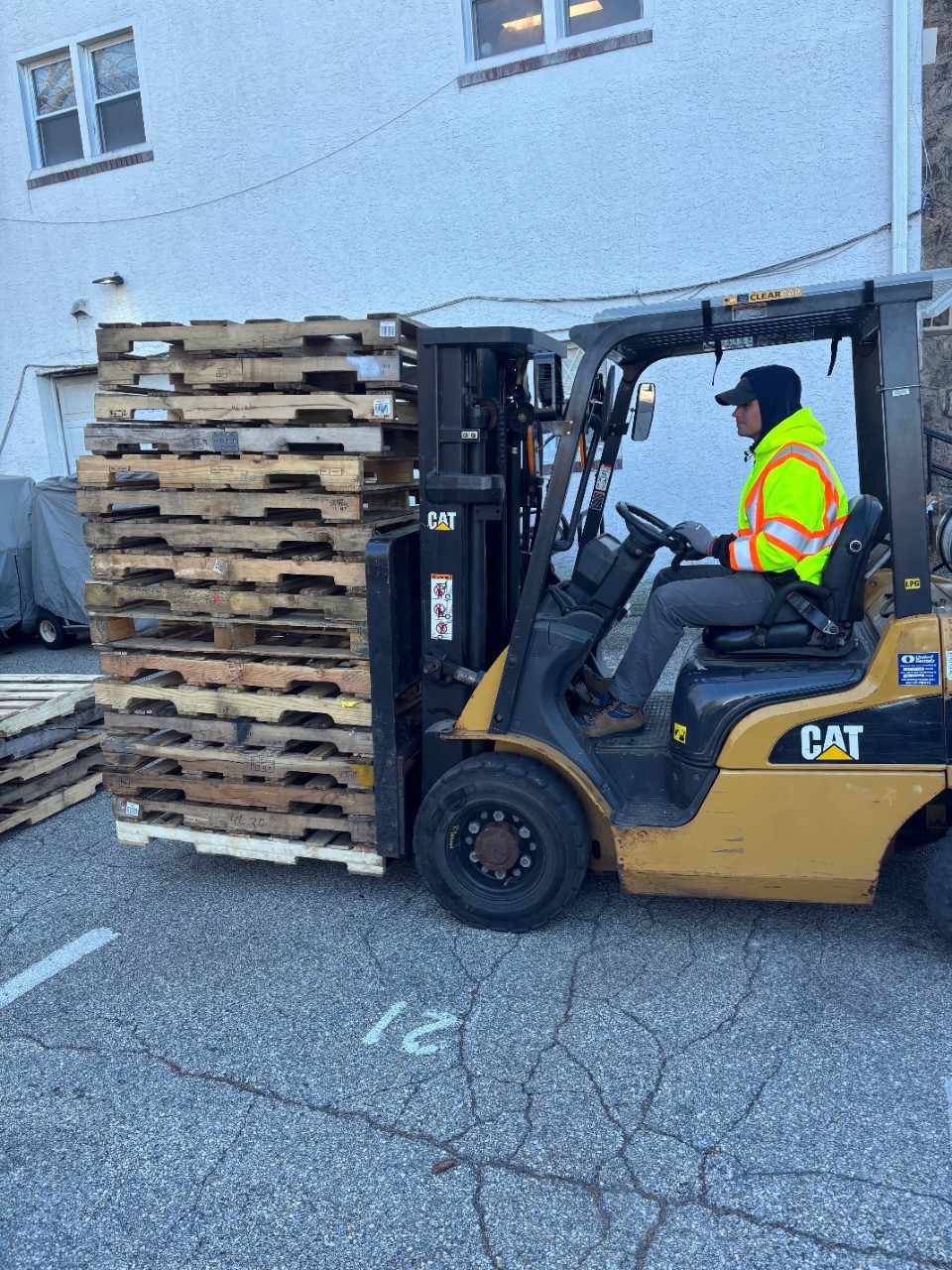
To improve waste diversion on campus, Villanova Waste & Recycling collects pallets across the University from many different points of generation. Villanova receives many shipments on pallets throughout the year, and many of those shipments arrive on pallets, which are not intended to be single-use disposable items.
From the beginning of this program in 2022 through 2025, we have collected and redistributed more than 2100 wooden pallets for reuse, weighing more than 75,000 lbs. Using calculations through the EPA's WARM model, ecological contributions of this effort have been as follows:
Estimated avoided greenhouse gases:
- about 2–6 passenger cars removed from the road for one year
Estimated energy savings:
- Estimated energy savings ≈ 168 – 336 million BTU.
Rough household equivalent: U.S. household energy use ≈ 2–4 homes’ annual energy use
Estimated landfill reduction:
- 519 cubic yards of landfill space saved.
Other ecological/resource benefits (qualitative):
- Small amount of revenue generated to the University through resale of pallets, rather than having to pay disposal costs for this material
- Timber saved / reduced demand for virgin lumber (extends forest resource life).
- Materials & energy avoided from milling, drying, and manufacturing replacement pallets.
- Fewer disposal/transport trips, lowering hauling emissions and costs.
- Secondary uses: repaired pallets, wood chips/mulch, or biomass feedstock if eventually repurposed.
Standard size wooden pallets (48" x 40") are the primary pallet type collected for reuse. Other sizes, or pallets damaged beyond repair are recycled.
If you have pallets on campus that need to be recycled, or qualify for reuse, please submit an FMO work request to have them picked up by the Waste & Recycling team.