
Organics Waste and Food Waste
Diverting organic waste and food scraps from landfills or incinerators is essential because it reduces greenhouse gas emissions, cuts disposal costs, and turns valuable nutrients into resources rather than pollution. When food decomposes in landfills, it produces methane, a potent climate warming gas, while incineration destroys materials that could instead be composted or processed into renewable energy. By keeping organics out of the trash stream, we conserve landfill space, support healthier soils through compost, and build a more efficient, circular system where resources are recovered rather than wasted.
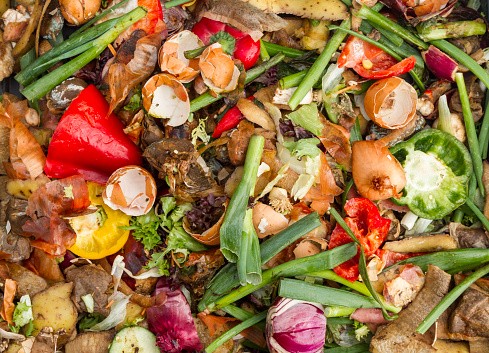
Villanova University is actively committed to reduce, recover, or divert as much organics waste as possible.
- Reduce: Source reduction efforts are led by VU Dining Services through the use of LeanPath technology.
- Reuse: various food donation programs exist on campus, most notably including efforts by VU's student led Food Recovery Network. Also, the VU Food News GroupMe chat helps connect surplus food from events to hungry Villanovan's
- Landscaping debris, or yard waste, on campus is composted by the Grounds Department. All dead leaves and plant matter are composted on campus and used as soil amendments in the landscaping operations
- Pre-consumer food waste is currently diverted from landfill or incineration through aerobic biodigestion systems in campus kitchens
- Post-consumer food waste is collected and composted off site. This is an opt-in program, available to select offices, departments, or student apartments in order to mitigate contamination of non-compostable items in this waste stream.