
Passion and Profession: A Historical Journey Through Education
Fueled by his Villanova experience, Charles Withers ’19 MA shares his love of history with students and readers alike.
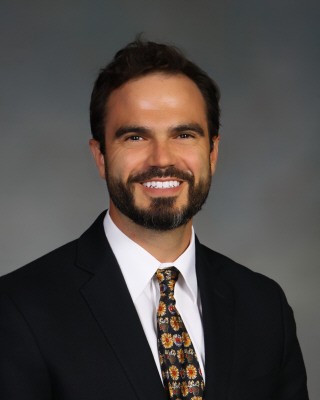
Charles Withers ’19 MA, loves to teach history. Whether engaging with students or exploring course material, it’s his daily inspiration. That fire for exploring history was strengthened in his formative experience at Villanova University’s graduate history program.
“I get to teach about a subject that I’m passionate about,” Withers said. “I just look forward to those interactions; our kids are amazing.”
Withers works as a history teacher at Haverford High School and is the author of a forthcoming book about Villanova’s recent history titled, Rooted, Restless.
He grew up locally and was already well acquainted with the University, but when asked why he decided to pursue his master’s degree at Villanova, he emphasized that the University’s character is what sets it apart.
“Villanova has such a great reputation, not only in this area, but in the world,” Withers said. “So being able to tell people that I went through the program there brings me so much pride.”
Withers experienced several interesting courses in the graduate history program, but what stood out to him was the first class he took with Judith Giesberg, PhD, the Robert M. Birmingham Chair in the Humanities and a professor of history.
That class met at the Pennsylvania Archives in Philadelphia where he and his classmates were handed a profile of a 19th-century orphan. From there, they were asked to follow the child’s story throughout the semester.
“It was such an interesting and personal way to explore history,” said Withers. “I learned about the history and evolution of the concept of childhood and its changing meaning throughout time.”
He said, “Chasing [the child]’s story fascinated me—especially as I viewed his story in the context of race in America. Looking back, it was one of my first genuine windows into the field of history; the responsibility of historians to tell the stories of others, and one of the first steps in a program that helped prepare me to one day take on this meaningful history of the University.”
Withers’ love for his courses in the graduate history department was consistent throughout his time at Villanova. He also spoke fondly of his professors, his peers and the interactive environment in which they engaged.
“I remember just sitting around a table and conversing about things that we really cared for, that we were working hard for,” Withers said. “Our instructors would sit too, which felt like they were learning from us just as much as we were learning from them.”
Withers credits his Villanova experience for positively influencing his career and as a teacher, he uses ideas gleaned from his Villanova coursework in his classroom with students who he says could one day be Villanovans.
“The caliber is high; you’ve got to be willing to put in the hours,” Withers said. “I know that can be tough sometimes, but if you love what you do, Villanova is the type of place that will encourage you to be passionate about it because they're passionate about it, too.”
About Villanova University’s College of Liberal Arts and Sciences: Since its founding in 1842, Villanova University’s College of Liberal Arts and Sciences has been the heart of the Villanova learning experience, offering foundational courses for undergraduate students in every college of the University. Serving more than 4,500 undergraduate and graduate students, the College is committed to fortifying them with intellectual rigor, multidisciplinary knowledge, moral courage and a global perspective. The College has more than 40 academic departments and programs across the humanities, social sciences, and natural and physical sciences.
SCHEDULE YOUR CAMPUS TOUR
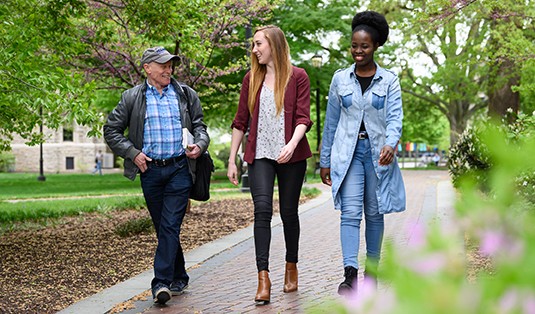
The CLAS Office of Graduate Studies offers personal tours of the beautiful Villanova campus. All tours begin in the Graduate Studies Office, located in Vasey Hall.
Schedule your tour!